XefAI Perspectives
Healthcare AI Procurement: What Enterprise Buyers Should Evaluate
A practical framework for enterprise healthcare AI procurement across capability fit, governance support, integration assumptions, and long-term operating value.
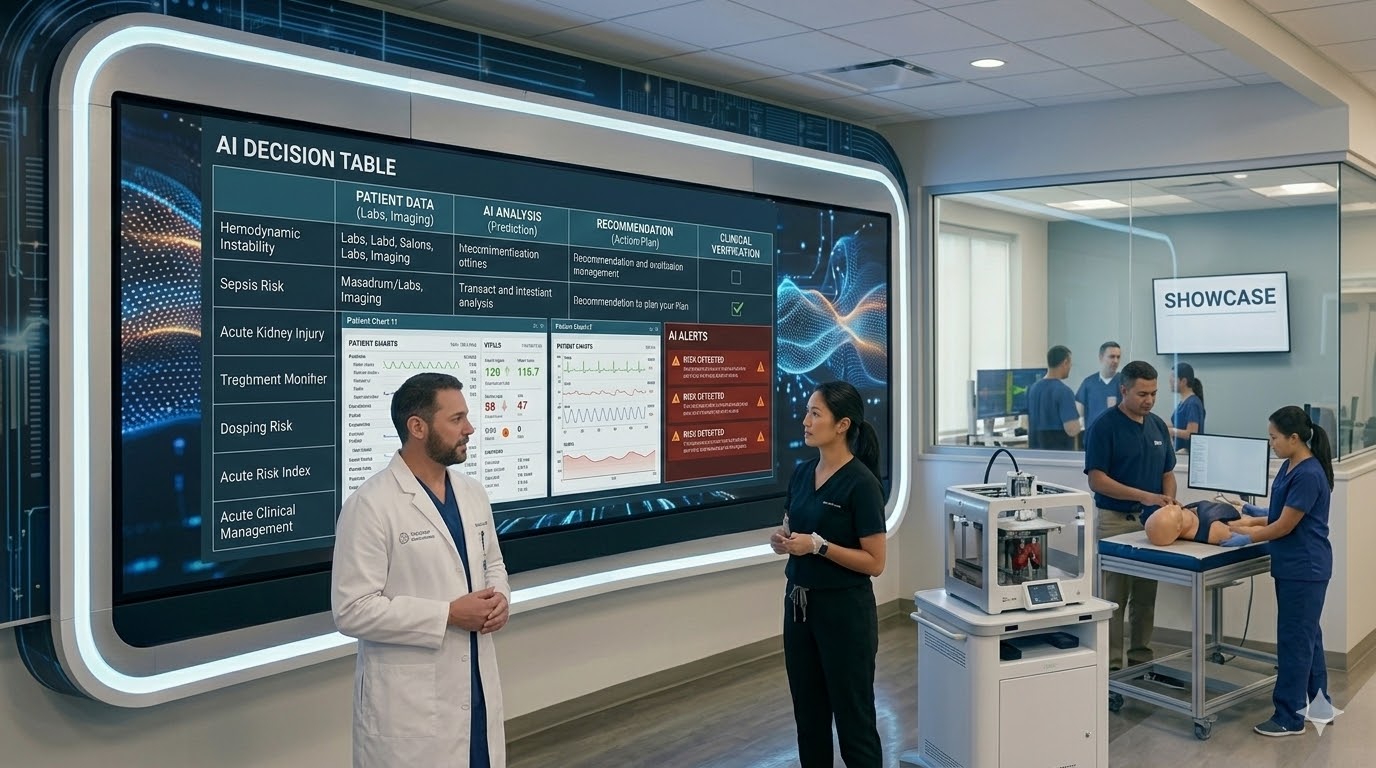
Procurement for healthcare AI should not be reduced to feature comparison and commercial terms. Enterprise buyers need to understand how the product will behave inside regulated workflows, what assumptions it makes about data and integration, and how it will be governed over time.
What enterprise buyers should evaluate
- Workflow specificity and implementation realism.
- Data requirements and context assumptions.
- Governance and monitoring support.
- Security, auditability, and access controls.
- Vendor operating model and change support.
Why procurement quality matters
Procurement sets the tone for the entire deployment. If the evaluation focuses on promises rather than operating reality, the organization often pays for that mistake later during rollout.
The bottom line
Healthcare AI procurement should be treated as an operating model decision as much as a technology purchase.
A procurement evaluation model
Healthcare AI procurement is strongest when buyers test workflow fit, data assumptions, control maturity, and operating burden before they optimize commercial terms. This order of evaluation usually produces better enterprise decisions.
Strategic implication
As the healthcare AI market matures, procurement quality will increasingly differentiate organizations that scale effectively from those that accumulate expensive friction.
Strategic questions healthcare leaders should ask
For healthcare organizations thinking seriously about healthcare ai procurement: what enterprise buyers should evaluate, the most important next step is not simply agreeing with the argument. It is translating the issue into executive questions that can guide investment, governance, and sequencing. Leaders should ask whether the organization has defined ownership for ai procurement, whether the current data and platform environment can support the required workflow, and whether the expected outcome is tied to measurable operational or clinical value. They should also ask how this topic connects to enterprise priorities rather than treating it as a standalone initiative.
Leaders should be especially careful to distinguish between local enthusiasm and enterprise readiness. In healthcare, a concept can appear strategically compelling while still being difficult to deploy broadly because of workflow variation, integration complexity, or missing governance discipline. That is why decisions around ai procurement and enterprise buying should always be connected to operating assumptions, not just market trends.
- What enterprise problem is this topic actually solving for our organization?
- What data, workflow, and governance dependencies must be true before scale is realistic?
- Which executive, clinical, and technical leaders need to own the next decisions?
- How will we know whether this area is creating durable value rather than isolated momentum?
- What reusable capability could be built here that supports future AI deployments?
Common mistakes organizations make
One of the most common mistakes healthcare organizations make is treating topics like healthcare ai procurement: what enterprise buyers should evaluate as isolated initiatives rather than parts of a broader enterprise AI operating model. This usually leads to fragmented ownership, inconsistent review standards, and local optimization without enterprise leverage. Another mistake is over-indexing on technology exposure while underestimating the operational design required to make AI work in the real world.
Organizations also tend to move in one of two unhealthy extremes. Some spend too long debating the concept without building any practical execution model. Others move too quickly into vendors, pilots, or workflow changes before agreeing on governance, accountability, and outcome measures. Both patterns slow scale. In healthcare, the most effective path is usually disciplined progression: clarify the value thesis, assess readiness, define controls, deploy in workflow, and learn in a way that can be repeated.
What this means for enterprise planning
The broader implication of this topic is that healthcare AI maturity is cumulative. Organizations do not scale by solving one problem at a time in isolation. They scale by using each high-priority domain to strengthen enterprise capability. A focused investment in ai procurement should therefore improve more than one use case. It should sharpen governance, clarify decision rights, expose platform gaps, improve change management discipline, or strengthen the organization’s ability to measure AI value over time.
That is why strong healthcare AI programs are rarely built around one technology purchase or one successful pilot. They are built around a sequence of choices that gradually make the enterprise more capable of adopting AI with confidence. Leaders should read each perspective through that lens. The question is not just whether the argument is correct. The question is how the organization should respond in a way that improves enterprise readiness.
Practical next steps for healthcare organizations
- 1Translate the article into an enterprise planning discussion. Identify which executive, clinical, operational, and platform leaders should review this topic together.
- 2Assess current readiness honestly. Determine whether the barriers are strategic, architectural, workflow-related, governance-related, or adoption-related.
- 3Identify one or two practical initiatives that would create both local value and reusable capability in this area.
- 4Define how progress will be measured over the next two to four quarters so the organization can distinguish thought leadership from operational change.
Closing perspective
The healthcare organizations that benefit most from AI will not be those that simply consume more ideas about AI. They will be the ones that translate topics like healthcare ai procurement: what enterprise buyers should evaluate into disciplined enterprise action. That requires strategy, operating model clarity, governance, workflow realism, and leadership alignment. In that sense, each perspective is not just a point of view. It is a prompt for how healthcare leaders should decide what to build next.
Thought Leadership
AI in Healthcare, distilled
for the executive agenda.
Curated perspectives, research, and frontier analysis — delivered directly to your inbox.